Luminiferous aether
Cleveland, July 1887. Michelson and Morley lay a stone slab on a mercury float, set mirrors on it and turn it slowly. The Earth flies round the Sun at 30 km/s, and if light is a wave in a stationary aether, the oncoming aether wind should shift the fringes in the eyepiece by 0.4 of a fringe. They waited for the shift. It never came.
The aether was invented because a wave needs a medium. Sound travels through air, a wave through water — so light must travel through something that fills empty space. The aether had to be stiffer than steel to carry such fast waves, and yet not get in the way of the planets. The 1887 experiment showed that light moves the same way in every direction, however the Earth is flying. In 1905 Einstein made this a law, and the aether was no longer needed.
| Notation | aether · luminiferous aether · no symbol |
| How it was sought | via the Earth’s speed through the aether — the shift of interference fringes |
| What was assumed | a stationary medium · the speed of light depends on the observer’s motion |
| Introduced and withdrawn | Huygens, 1690 · Fresnel, 1818 · Michelson and Morley, 1887 · Einstein, 1905 |
| Today’s notation | c = 299 792 458 m/s exactly, since 1983 — by the definition of the metre |
| Typical values | 0.37 fringe — expected in 1887 · under 0.01 — observed · 10⁻¹⁷ — precision today |
01 · Definition
The medium light runs through
If light is a wave in the aether, it has a speed relative to the aether, c. An observer flying through the aether should see light faster when meeting it head-on and slower when chasing it. The Earth flies round the Sun at 30 km/s — one ten-thousandth of c. That was the difference people tried to catch.
Such a correction cannot be measured directly; it is too small. Michelson compared two paths of light: along the wind and across it. Like a swimmer going there and back along a river and then across it: the trip along the current takes longer. The difference is the square of a small ratio, (v/c)² = 10⁻⁸. Interference makes it visible: a shift of a fraction of a wavelength moves the bright fringes.
Who gets back first
A river of width L flows from left to right; the lilac arrows are the current. Two swimmers swim at the same speed c: the golden one goes along the river and back, the blue one goes across to the far bank and back. The bars below are their travel times. The swimmer going across always gets back first. In the same way, a beam travelling across the aether wind should have beaten a beam travelling along it.
Turn the slab and watch the eyepiece
There is one main action — the «Turn the slab» button. The stone slab floats on mercury and slowly turns. In the centre it is seen from above: a golden lamp, blue beams running to the mirrors at the ends of the arms, with 16 reflections each, 11 m of path in all. The lilac strokes are the aether wind; its speed is set by the slider. On the right is the eyepiece: bright and dark fringes. If the aether exists, the fringes should sway while the slab turns. Under the eyepiece is a graph: the lilac curve is the shift predicted by aether theory, the golden dots are what is actually seen. The «World with aether / World of 1887» switch shows both answers.
—
02 · Conversion
The aether had no unit, so we convert the speed that was being sought. The fringe shift in the interferometer grows as β², the square of the fraction of the speed of light. The Earth’s orbital speed gives β = 10⁻⁴, β² = 10⁻⁸.
Today no speed is measured «relative to the aether». There is only motion relative to the cosmic microwave background: the Sun moves through it at 370 km/s, but that is an apparent motion, not the wind of a medium.
| {n} | {v} | {note} |
03 · Orders of magnitude
04 · Measuring instruments
05 · Writing rules
06 · Neighbouring units
Phlogiston vanished without a trace; caloric left the calorie behind. The aether left the most of all: Maxwell’s equations were written for an elastic aether, and they outlived it. And the constant speed of light that abolished the aether has itself become a foundation of measurement: the metre is defined through it.
07 · Historical section
The 1887 experiment is a model of how to set up a measurement against noise. The sandstone slab floated on mercury so that it could be turned without jolts. Observations were made in a basement, at noon and in the evening, sixteen readings per revolution. They expected 0.4 of a fringe; the scatter of the readings was about 0.01.
The null result gave an upper bound: the Earth’s speed through the aether is less than about 5—8 km/s. A hundred years later the constancy of the speed of light became part of the definition of the metre. Since 1983 the metre has been the distance light travels in 1/299 792 458 of a second.
Catalogue of quantities
the whole index →The seven SI base units
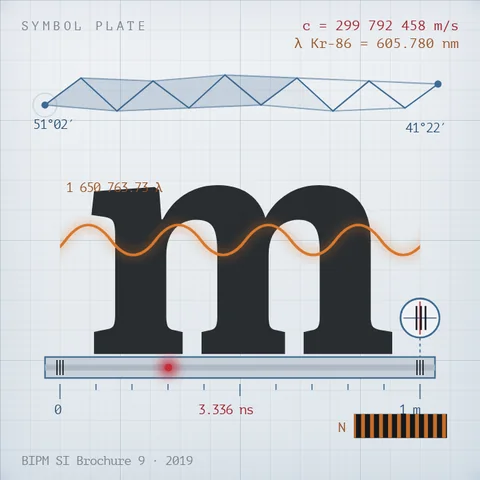
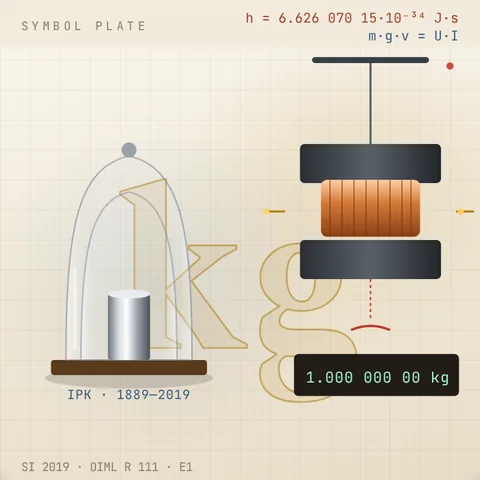
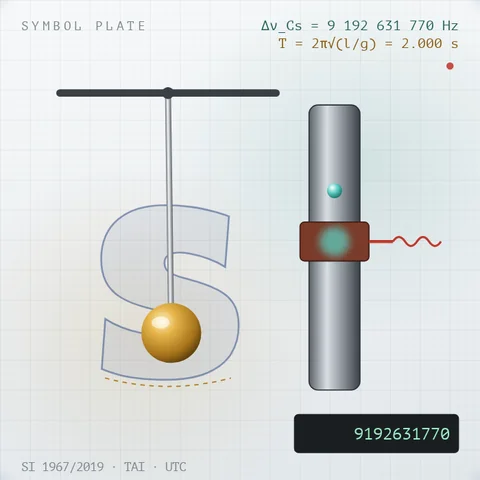
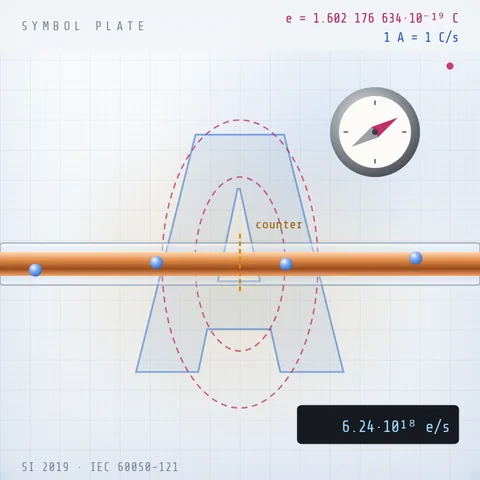
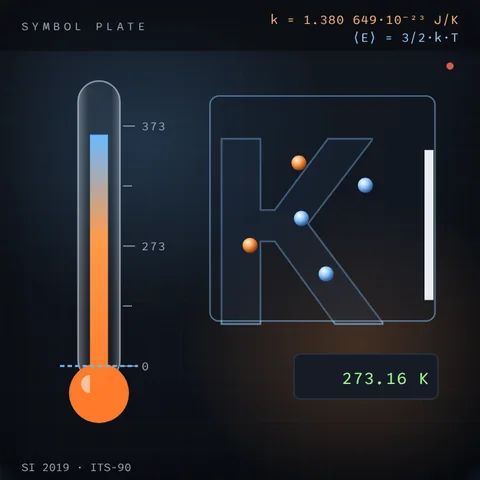
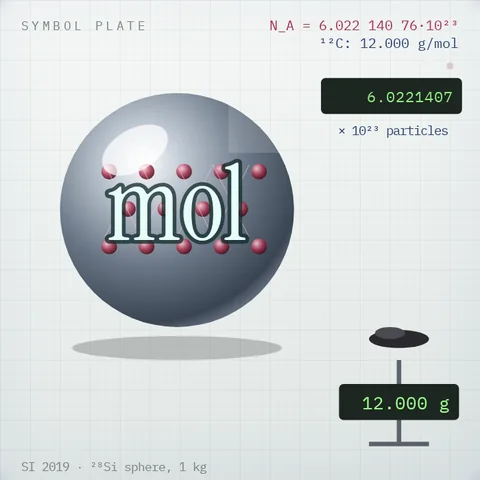
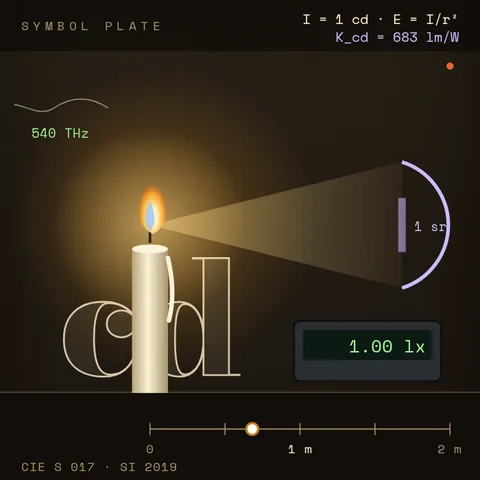
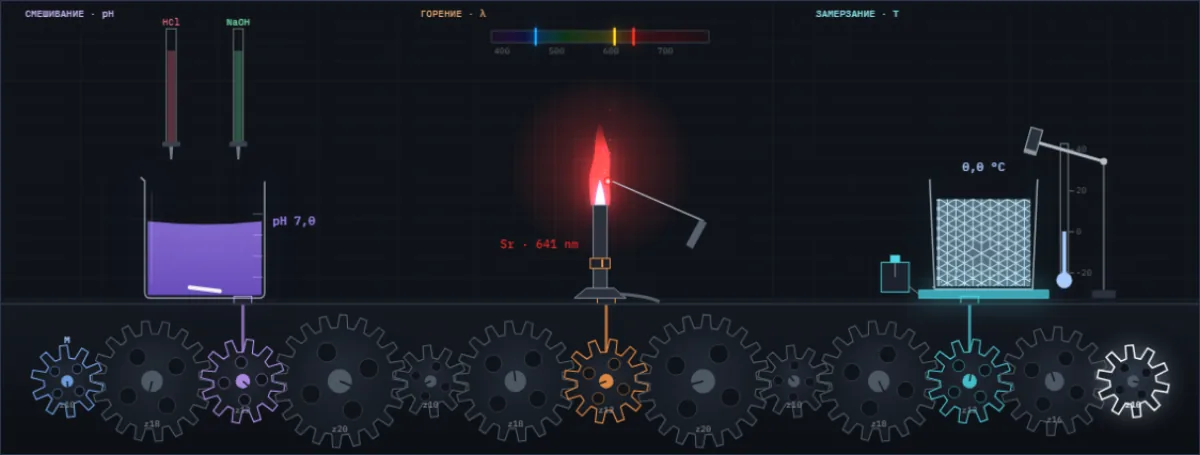
A drop of acid changes the colour of the juice, salt colours the flame, water freezes at a tap. Below them are all Simetrium sheets, by discipline and alphabetically.
Open the index →