Phlogiston
Paris, 1776. For twelve days Lavoisier heats mercury in a retort whose neck runs under a glass bell jar. Red flakes of calx build up on the mercury, and the air under the bell jar shrinks. Then he weighs. The calx is heavier than the mercury it grew from. If burning released phlogiston, the metal should have become lighter.
Phlogiston is the principle of combustibility from Stahl’s chemistry. Combustible bodies are rich in it and give it up to the air when they burn or are calcined. The theory explained a great deal: why charcoal burns almost without residue, why a fire goes out under a cover, why ore is reduced with charcoal. But the weights did not add up. Metals grew heavier when calcined, and the followers of the theory had to give phlogiston a negative weight.
| Notation | φ · phlogiston · the sheet’s sign |
| How it was estimated | by combustibility and by the “goodness” of air — how much more phlogiston it can take |
| What was assumed | metal = calx + phlogiston · burning releases phlogiston into the air |
| Introduced and withdrawn | Becher, 1667 · Stahl, 1703 · Lavoisier’s experiments, 1772—1777 · Traité élémentaire de chimie, 1789 |
| Today’s notation | burning is combination with oxygen · mass is conserved · 2Hg + O₂ → 2HgO |
| Typical values | +8 % — mass gain of mercury · 20.9 % — oxygen share of air · ⅕ — loss of air under the bell jar |
01 · Definition
What leaves a burning body
According to Stahl, every combustible body contains phlogiston. Charcoal consists almost entirely of it, which is why it burns without residue. A metal is a calx combined with phlogiston. When a metal is calcined it loses its phlogiston and turns into the calx. If the calx is heated with charcoal, the charcoal gives phlogiston back to it, and the metal appears again.
In this system the air is a sponge for phlogiston. Under a bell jar the fire goes out because the air is saturated and takes up no more. Priestley obtained a gas in which a candle burned brighter than usual and called it “dephlogisticated air”. Lavoisier named the same gas oxygen and turned the scheme around: burning is not a release of phlogiston but a combination with oxygen.
Where the mass went
Let us calcine 10 g of a metal in air. The two columns are two ways of recording the same experiment. On the left is Stahl’s account: yellow phlogiston leaves the metal, so the calx should get lighter. On the right is Lavoisier’s account: red oxygen from the air enters the metal. The grey bar below is what the balance actually shows.
Two names for one gas
Each cell holds a substance from eighteenth-century experiments. Above is its present formula, below is what the followers of phlogiston called it. Oxygen is marked in red, and what was taken for phlogiston in yellow. The centre is oxygen, Priestley’s “dephlogisticated air”.
Mercury eats a fifth of the air
On the left is a furnace with a retort: it holds mercury, and a long neck runs under a glass bell jar standing in a bath of mercury. Blue dots are the air under the bell jar, the red ones among them are its oxygen. When the furnace burns, oxygen goes into the mercury of the retort, red calx grows on its surface, and the level of mercury in the bell jar rises. On the right is a screen: the volume of air under the bell jar by day, and the balance carrying the whole apparatus. By phlogiston theory the air should have increased, since phlogiston goes into it. The second part of the experiment: the calx is collected and heated harder, it gives the oxygen back, and a candle burns brighter in it. In the retort the gas is hot, and its molecules dart about faster the hotter the furnace. In the bell jar the air is cold and only drifts slowly towards the neck. Time is sped up: one second is twelve hours, and the button “Straight to day 12” runs the whole experiment in a couple of seconds. If you touch nothing for 20 s, the experiments run by themselves.
—
02 · Conversion
| {n} | {v} | {note} |
Phlogiston had no unit, so we convert what can be weighed: the metal, the calx and the oxygen. Lavoisier measured mass in grains, ounces and pounds of the Paris system, and volume in cubic inches, pouces cubes.
The Paris grain is 53.1 mg, the cubic inch is 19.84 cm³. Lavoisier wrote that out of 50 cubic inches of air the mercury took 8—9, and 45 grains of calx resulted. In today’s figures that is 0.17 L of air and 2.4 g of calx.
03 · Orders of magnitude
04 · Measuring instruments
05 · Writing rules
06 · Neighbouring units
Three imponderable matters of the eighteenth century stand side by side, and their fates differ. Phlogiston left no trace. Caloric left the calorie and the theory of Carnot’s engines. The aether left the field equations. And in the place of phlogiston stand two concepts that chemistry still uses: the mole of oxygen and mass that does not vanish.
07 · Historical section
Phlogiston lost not a dispute about words but a dispute about weights. Lavoisier made a rule of a simple thing: weigh everything that goes into an experiment and comes out of it, vessels and gases included. Then the mass always turned out the same, and no superfluous “principles” were needed for the explanation.
His precision was high for the eighteenth century: the balance distinguished tenths of a grain, about 5 mg. But in the mercury experiment he himself wrote of discrepancies of a few percent — the air changed its volume with the weather, and it was corrected for temperature and pressure. Such corrections turned chemistry into a quantitative science.
Catalogue of quantities
the whole index →The seven SI base units
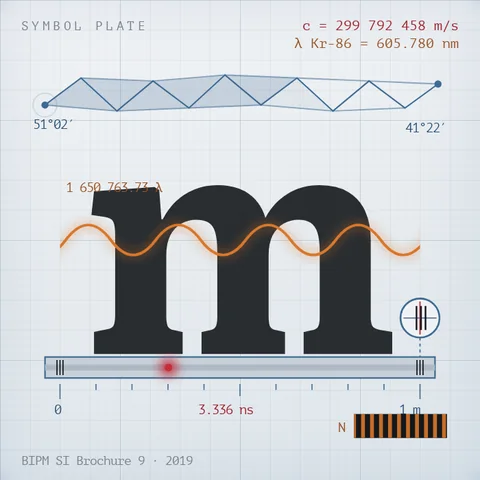
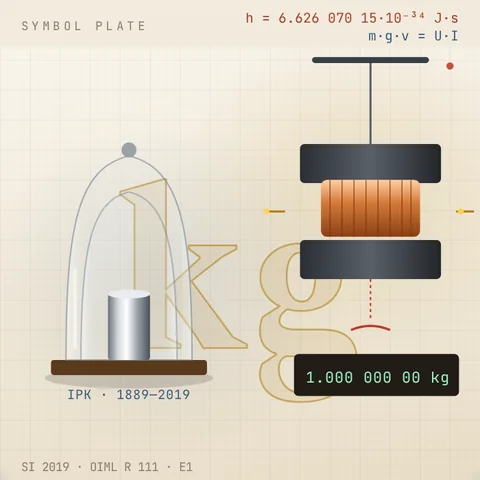
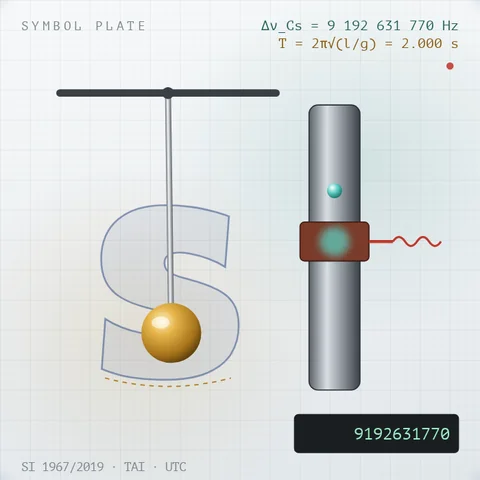
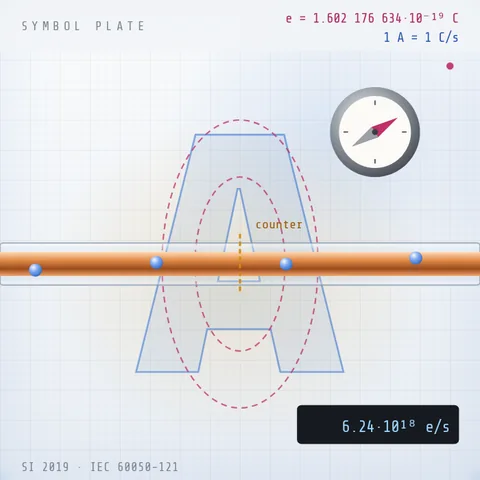
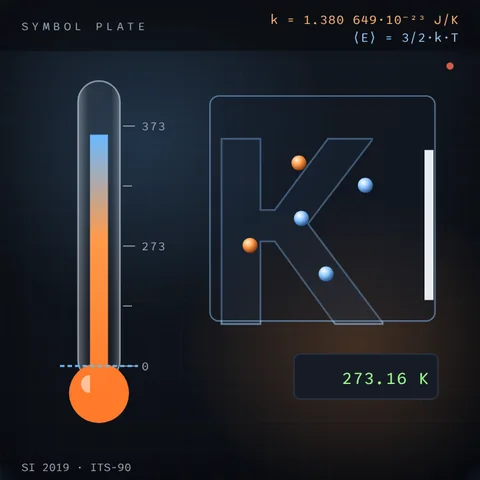
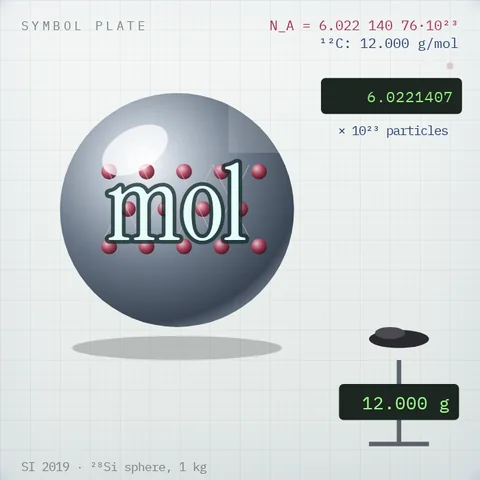
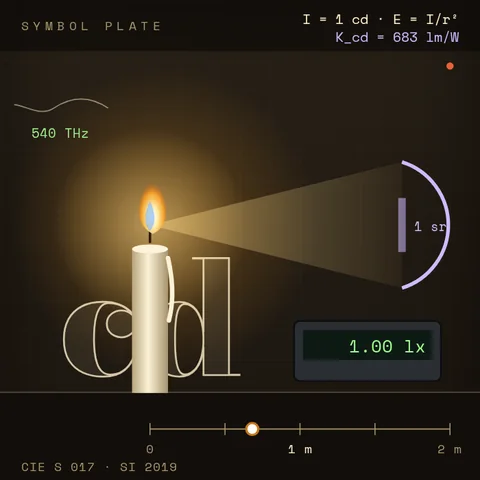
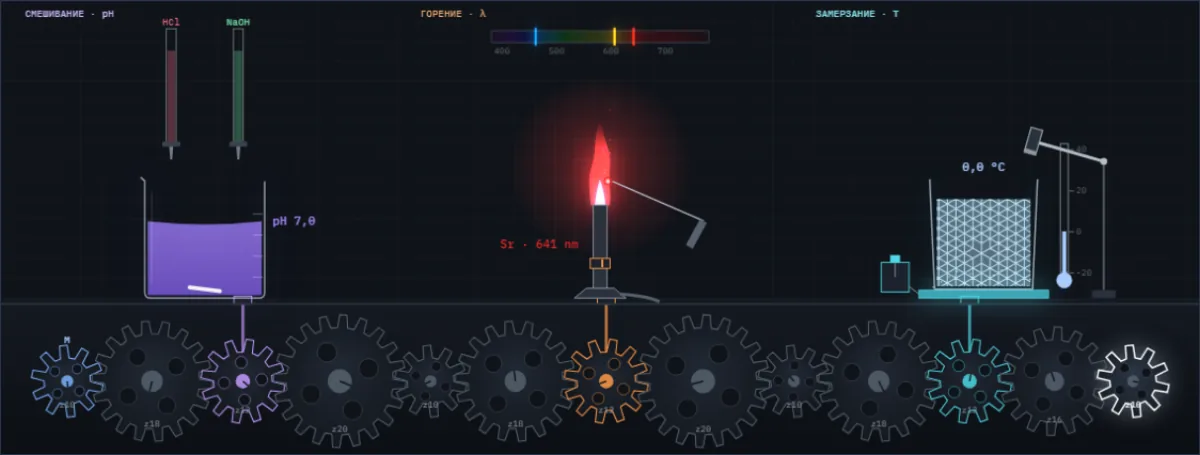
A drop of acid changes the colour of the juice, salt colours the flame, water freezes at a tap. Below them are all Simetrium sheets, by discipline and alphabetically.
Open the index →