SIMETRIUM .COM tok/s · TPOT · BW
EN|36 languages
tok/sSYMBOL PLATEη·BW / bytes ≈ 146 tok/s3.35 TB/s · 16.1 GB · η 0.70.111010010³10⁴tok/stok/s01234501234567890123456789llama-bench tg128 · 8B BF16 · H100 SXMAAAWgmp1bWIAAAAeanVtZGMycGEAEQAQgAAAqgA4m3EDYzJwYQAAABZcanVtYgAAAEdqdW1kYzJtYQARABCAAACqADibcQN1cm46YzJwYTphZTI1ODMzMC00NThmLTRlMGMtYTkxOC05OTg5OThhM2IzNzUAAAADl2p1bWIAAAApanVtZGMyYXMAEQAQgAAAqgA4m3EDYzJwYS5hc3NlcnRpb25zAAAAALxqdW1iAAAARGp1bWRjYm9yABEAEIAAAKoAOJtxE2MycGEuaW5ncmVkaWVudC52MwAAAAAYYzJzaNOrTLnaRVfkdXa2eD4Cc0QAAABwY2JvcqNpZGM6Zm9ybWF0bWltYWdlL3N2Zyt4bWxqaW5zdGFuY2VJRHgseG1wOmlpZDo0YWI5OGQ1MC0yZTU3LTQ5ZDItYWRiZS1jMjlhYmU1NzY0NjlscmVsYXRpb25zaGlwaHBhcmVudE9mAAAB4mp1bWIAAABBanVtZGNib3IAEQAQgAAAqgA4m3ETYzJwYS5hY3Rpb25zLnYyAAAAABhjMnNob2qn66MEyB1rp//zehlumwAAAZljYm9yomdhY3Rpb25zgqJmYWN0aW9ua2MycGEub3BlbmVkanBhcmFtZXRlcnOha2luZ3JlZGllbnRzgaJjdXJseC1zZWxmI2p1bWJmPWMycGEuYXNzZXJ0aW9ucy9jMnBhLmluZ3JlZGllbnQudjNkaGFzaFgg6y/nCHxb8wigZnTtHhUkNeq9O3D9RNxemkJ+SbZ64CukZmFjdGlvbngdY29tLmFudGhyb3BpYy5jbGF1ZGUucHJvdmlkZWRqcGFyYW1ldGVyc6F4H2NvbS5hbnRocm9waWMub3JpZ2luLWNvbmZpZGVuY2VndW5rbm93bmtkZXNjcmlwdGlvbnhmQ2xhdWRlIHByb3ZpZGVkIHRoaXMgZmlsZSBhdCB0aGUgcmVxdWVzdCBvZiBhIHVzZXIgYW5kIG1heSBoYXZlIGNyZWF0ZWQgb3IgbW9kaWZpZWQgdGhlIGZpbGUgY29udGVudHMubXNvZnR3YXJlQWdlbnShZG5hbWVmQ2xhdWRlcmFsbEFjdGlvbnNJbmNsdWRlZPUAAADIanVtYgAAAEBqdW1kY2JvcgARABCAAACqADibcRNjMnBhLmhhc2guZGF0YQAAAAAYYzJzaCOVNjvmjwyF1/ex8jMme7cAAACAY2JvcqVjYWxnZnNoYTI1NmNwYWRMAAAAAAAAAAAAAAAAZGhhc2hYIB3/+pLi2eLQxcEPO0Vlwhc03DayV8rC1BixSUuCSoWpZG5hbWVuanVtYmYgbWFuaWZlc3RqZXhjbHVzaW9uc4GiZXN0YXJ0GR89Zmxlbmd0aBkeBAAAAj5qdW1iAAAAJ2p1bWRjMmNsABEAEIAAAKoAOJtxA2MycGEuY2xhaW0udjIAAAACD2Nib3KlY2FsZ2ZzaGEyNTZpc2lnbmF0dXJleE1zZWxmI2p1bWJmPS9jMnBhL3VybjpjMnBhOmFlMjU4MzMwLTQ1OGYtNGUwYy1hOTE4LTk5ODk5OGEzYjM3NS9jMnBhLnNpZ25hdHVyZWppbnN0YW5jZUlEeCx4bXA6aWlkOjQyOGUwYzNlLWFjMjEtNGQyMS1iODAyLTFhYjViNjQxYTIxMHJjcmVhdGVkX2Fzc2VydGlvbnODomN1cmx4LXNlbGYjanVtYmY9YzJwYS5hc3NlcnRpb25zL2MycGEuaW5ncmVkaWVudC52M2RoYXNoWCDrL+cIfFvzCKBmdO0eFSQ16r07cP1E3F6aQn5JtnrgK6JjdXJseCpzZWxmI2p1bWJmPWMycGEuYXNzZXJ0aW9ucy9jMnBhLmFjdGlvbnMudjJkaGFzaFggBi7XWHV8nrNnrvzNZ++SXY39BH7RtXyVN5dxBPF8ya2iY3VybHgpc2VsZiNqdW1iZj1jMnBhLmFzc2VydGlvbnMvYzJwYS5oYXNoLmRhdGFkaGFzaFggHmPUu+KH1rju0CZP8A9rRPRSzn1M+XwnweBT2qEWKxp0Y2xhaW1fZ2VuZXJhdG9yX2luZm+jZG5hbWVvQW50aHJvcGljIEZpbGVzZ3ZlcnNpb25lMS4wLjBrc3BlY1ZlcnNpb25lMi40LjAAABA4anVtYgAAAChqdW1kYzJjcwARABCAAACqADibcQNjMnBhLnNpZ25hdHVyZQAAABAIY2JvctKEWQISogEmGCFZAgowggIGMIIBjaADAgECAhRA5aAK7sI50L64g/oGQgU9Z1UTADAKBggqhkjOPQQDAzBJMRcwFQYDVQQKEw5BbnRocm9waWMsIFBCQzEuMCwGA1UEAxMlQW50aHJvcGljIENvbnRlbnQgQ3JlZGVudGlhbHMgUm9vdCBDQTAeFw0yNjA4MDcxODQzNTZaFw0yODA4MDYxOTQzNTZaMEQxFzAVBgNVBAoTDkFudGhyb3BpYywgUEJDMSkwJwYDVQQDEyBBbnRocm9waWMgQ2xhdWRlIENvbnRlbnQgU2lnbmluZzBZMBMGByqGSM49AgEGCCqGSM49AwEHA0IABJh6CmvLUBgFFNU0vUKlOVtE6djd17L5SuwX0LemFisBM3dkd/3cyjxFA3Qo5S46fX0/ihY0VZ7mfb9KF703t5OjWDBWMA4GA1UdDwEB/wQEAwIHgDAVBgNVHSUEDjAMBgorBgEEAYPoXgIBMAwGA1UdEwEB/wQCMAAwHwYDVR0jBBgwFoAUzlHiBIFOZFsj+OPEz5o+nMHXXMIwCgYIKoZIzj0EAwMDZwAwZAIwMXMdFJ4BetLLVY7ORuE9noqbbAZOZn/aArXyTwFAZfKrPzxF2vPoJNf1+UCdg1XGAjBwX1zd9WGqYkqmL5SFqw1QySjr1zJfpJM9+1rdDwSPLMOPOjKuiXjoU/pUUeG9RwmhY3BhZFkNngAAAAAAAAAAAAAAAAAAAAAAAAAAAAAAAAAAAAAAAAAAAAAAAAAAAAAAAAAAAAAAAAAAAAAAAAAAAAAAAAAAAAAAAAAAAAAAAAAAAAAAAAAAAAAAAAAAAAAAAAAAAAAAAAAAAAAAAAAAAAAAAAAAAAAAAAAAAAAAAAAAAAAAAAAAAAAAAAAAAAAAAAAAAAAAAAAAAAAAAAAAAAAAAAAAAAAAAAAAAAAAAAAAAAAAAAAAAAAAAAAAAAAAAAAAAAAAAAAAAAAAAAAAAAAAAAAAAAAAAAAAAAAAAAAAAAAAAAAAAAAAAAAAAAAAAAAAAAAAAAAAAAAAAAAAAAAAAAAAAAAAAAAAAAAAAAAAAAAAAAAAAAAAAAAAAAAAAAAAAAAAAAAAAAAAAAAAAAAAAAAAAAAAAAAAAAAAAAAAAAAAAAAAAAAAAAAAAAAAAAAAAAAAAAAAAAAAAAAAAAAAAAAAAAAAAAAAAAAAAAAAAAAAAAAAAAAAAAAAAAAAAAAAAAAAAAAAAAAAAAAAAAAAAAAAAAAAAAAAAAAAAAAAAAAAAAAAAAAAAAAAAAAAAAAAAAAAAAAAAAAAAAAAAAAAAAAAAAAAAAAAAAAAAAAAAAAAAAAAAAAAAAAAAAAAAAAAAAAAAAAAAAAAAAAAAAAAAAAAAAAAAAAAAAAAAAAAAAAAAAAAAAAAAAAAAAAAAAAAAAAAAAAAAAAAAAAAAAAAAAAAAAAAAAAAAAAAAAAAAAAAAAAAAAAAAAAAAAAAAAAAAAAAAAAAAAAAAAAAAAAAAAAAAAAAAAAAAAAAAAAAAAAAAAAAAAAAAAAAAAAAAAAAAAAAAAAAAAAAAAAAAAAAAAAAAAAAAAAAAAAAAAAAAAAAAAAAAAAAAAAAAAAAAAAAAAAAAAAAAAAAAAAAAAAAAAAAAAAAAAAAAAAAAAAAAAAAAAAAAAAAAAAAAAAAAAAAAAAAAAAAAAAAAAAAAAAAAAAAAAAAAAAAAAAAAAAAAAAAAAAAAAAAAAAAAAAAAAAAAAAAAAAAAAAAAAAAAAAAAAAAAAAAAAAAAAAAAAAAAAAAAAAAAAAAAAAAAAAAAAAAAAAAAAAAAAAAAAAAAAAAAAAAAAAAAAAAAAAAAAAAAAAAAAAAAAAAAAAAAAAAAAAAAAAAAAAAAAAAAAAAAAAAAAAAAAAAAAAAAAAAAAAAAAAAAAAAAAAAAAAAAAAAAAAAAAAAAAAAAAAAAAAAAAAAAAAAAAAAAAAAAAAAAAAAAAAAAAAAAAAAAAAAAAAAAAAAAAAAAAAAAAAAAAAAAAAAAAAAAAAAAAAAAAAAAAAAAAAAAAAAAAAAAAAAAAAAAAAAAAAAAAAAAAAAAAAAAAAAAAAAAAAAAAAAAAAAAAAAAAAAAAAAAAAAAAAAAAAAAAAAAAAAAAAAAAAAAAAAAAAAAAAAAAAAAAAAAAAAAAAAAAAAAAAAAAAAAAAAAAAAAAAAAAAAAAAAAAAAAAAAAAAAAAAAAAAAAAAAAAAAAAAAAAAAAAAAAAAAAAAAAAAAAAAAAAAAAAAAAAAAAAAAAAAAAAAAAAAAAAAAAAAAAAAAAAAAAAAAAAAAAAAAAAAAAAAAAAAAAAAAAAAAAAAAAAAAAAAAAAAAAAAAAAAAAAAAAAAAAAAAAAAAAAAAAAAAAAAAAAAAAAAAAAAAAAAAAAAAAAAAAAAAAAAAAAAAAAAAAAAAAAAAAAAAAAAAAAAAAAAAAAAAAAAAAAAAAAAAAAAAAAAAAAAAAAAAAAAAAAAAAAAAAAAAAAAAAAAAAAAAAAAAAAAAAAAAAAAAAAAAAAAAAAAAAAAAAAAAAAAAAAAAAAAAAAAAAAAAAAAAAAAAAAAAAAAAAAAAAAAAAAAAAAAAAAAAAAAAAAAAAAAAAAAAAAAAAAAAAAAAAAAAAAAAAAAAAAAAAAAAAAAAAAAAAAAAAAAAAAAAAAAAAAAAAAAAAAAAAAAAAAAAAAAAAAAAAAAAAAAAAAAAAAAAAAAAAAAAAAAAAAAAAAAAAAAAAAAAAAAAAAAAAAAAAAAAAAAAAAAAAAAAAAAAAAAAAAAAAAAAAAAAAAAAAAAAAAAAAAAAAAAAAAAAAAAAAAAAAAAAAAAAAAAAAAAAAAAAAAAAAAAAAAAAAAAAAAAAAAAAAAAAAAAAAAAAAAAAAAAAAAAAAAAAAAAAAAAAAAAAAAAAAAAAAAAAAAAAAAAAAAAAAAAAAAAAAAAAAAAAAAAAAAAAAAAAAAAAAAAAAAAAAAAAAAAAAAAAAAAAAAAAAAAAAAAAAAAAAAAAAAAAAAAAAAAAAAAAAAAAAAAAAAAAAAAAAAAAAAAAAAAAAAAAAAAAAAAAAAAAAAAAAAAAAAAAAAAAAAAAAAAAAAAAAAAAAAAAAAAAAAAAAAAAAAAAAAAAAAAAAAAAAAAAAAAAAAAAAAAAAAAAAAAAAAAAAAAAAAAAAAAAAAAAAAAAAAAAAAAAAAAAAAAAAAAAAAAAAAAAAAAAAAAAAAAAAAAAAAAAAAAAAAAAAAAAAAAAAAAAAAAAAAAAAAAAAAAAAAAAAAAAAAAAAAAAAAAAAAAAAAAAAAAAAAAAAAAAAAAAAAAAAAAAAAAAAAAAAAAAAAAAAAAAAAAAAAAAAAAAAAAAAAAAAAAAAAAAAAAAAAAAAAAAAAAAAAAAAAAAAAAAAAAAAAAAAAAAAAAAAAAAAAAAAAAAAAAAAAAAAAAAAAAAAAAAAAAAAAAAAAAAAAAAAAAAAAAAAAAAAAAAAAAAAAAAAAAAAAAAAAAAAAAAAAAAAAAAAAAAAAAAAAAAAAAAAAAAAAAAAAAAAAAAAAAAAAAAAAAAAAAAAAAAAAAAAAAAAAAAAAAAAAAAAAAAAAAAAAAAAAAAAAAAAAAAAAAAAAAAAAAAAAAAAAAAAAAAAAAAAAAAAAAAAAAAAAAAAAAAAAAAAAAAAAAAAAAAAAAAAAAAAAAAAAAAAAAAAAAAAAAAAAAAAAAAAAAAAAAAAAAAAAAAAAAAAAAAAAAAAAAAAAAAAAAAAAAAAAAAAAAAAAAAAAAAAAAAAAAAAAAAAAAAAAAAAAAAAAAAAAAAAAAAAAAAAAAAAAAAAAAAAAAAAAAAAAAAAAAAAAAAAAAAAAAAAAAAAAAAAAAAAAAAAAAAAAAAAAAAAAAAAAAAAAAAAAAAAAAAAAAAAAAAAAAAAAAAAAAAAAAAAAAAAAAAAAAAAAAAAAAAAAAAAAAAAAAAAAAAAAAAAAAAAAAAAAAAAAAAAAAAAAAAAAAAAAAAAAAAAAAAAAAAAAAAAAAAAAAAAAAAAAAAAAAAAAAAAAAAAAAAAAAAAAAAAAAAAAAAAAAAAAAAAAAAAAAAAAAAAAAAAAAAAAAAAAAAAAAAAAAAAAAAAAAAAAAAAAAAAAAAAAAAAAAAAAAAAAAAAAAAAAAAAAAAAAAAAAAAAAAAAAAAAAAAAAAAAAAAAAAAAAAAAAAAAAAAAAAAAAAAAAAAAAAAAAAAAAAAAAAAAAAAAAAAAAAAAAAAAAAAAAAAAAAAAAAAAAAAAAAAAAAAAAAAAAAAAAAAAAAAAAAAAAAAAAAAAAAAAAAAAAAAAAAAAAAAAAAAAAAAAAAAAAAAAAAAAAAAAAAAAAAAAAAAAAAAAAAAAAAAAAAAAAAAAAAAAAAAAAAAAAAAAAAAAAAAAAAAAAAAAAAAAAAAAAAAAAAAAAAAAAAAAAAAAAAAAAAAAAAAAAAAAAAAAAAAAAAAAAAAAAAAAAAAAAAAAAAAAAAAAAAAAAAAAAAAAAAAAAAAAAAAAAAAAAAAAAAAAAAAAAAAAAAAAAAAAAAAAAAAAAAAAAAAAAAAAAAAAAAAAAAAAAAAAAAAAAAAAAAAAAAAAAAAAAAAAAAAAAAAAAAAAAAAAAAAAAAAAAAAAAAAAAAAAAAAAAAAAAAAAAAAAAAAAAAAAAAAAAAAAAAAAAAAAAAAAAAAAAAAAAAAAAAAAAAAAAAAAAAAAAAAAAAAAAAAAAAAAAAAAAAAAAAAAAAAAAAAAAAAAAAAAAAAAAAAAAAAAAAAAAAAAAAAAAAAAAAAAAAAAAAAAAAAAAAAAAAAAAAAAAAAAAAAAAAAAAAAAAAAAAAAAAAAAAAAAAAAAAAAAAAAAAAAAAAAAAAAAAAAAAAAAAAAAAAAAAAAAAAAAAAAAAAAAAAAAAAAAAAAAAAAAAAAAAAAAAAAAAAAAAAAAAAAAAAAAAAAAAAAAAAAAAAAAAAAAAAAAAAAAAAAAAAAAAAAAAAAAAAAAAAAAAAAAAAAAAAAAAAAAAAAAAAAAAAAAAAAAAAAAAAAAAAAAAAAAAAAAAAAAAAAAAAAAAAAAAAAAAAAAAAAAAAAAAAAAAAAAAAAAAAAAAAAAAAAAAAAAAAAAAAAAAAAAAAAAAAAAAAAAAAAAAAAAAAAAAAAAAAAAAAAAAAAAAAAAAAAAAAAAAAAAAAAAAAAAAAAAAAAAAAAAAAAAAAAAAAAAAAAAAAAAAAAAAAAAAAAAAAAAAAAAAAAAAAAAAAAAAAAAAAAAAAAAAAAAAAAAAAAAAAAAAAAAAAAAAAAAAAAAAAAAAAAAAAAAAAAAAAAAAAAAAAAAAAAAAAAAAAAAAAAAAAAAAAAAAAAAAAAAAAAAAAAAAAAAAAAAAAAAAAAAAAAAAAAAAAAAAAAAPZYQJBTUQSC8t0eagG52F6h7nx+Nld+aOjYLODNt47tEt3eJH2fHcqn1xlxjUg7BMSjR2hYBAAda5Q7mePCgHMrxJI=
Letter case
Written as tok/s, t/s or tokens/s; in Ollama it is the eval rate. The inverse is the time per token, TPOT or ITL, in milliseconds: 10 ms per token is 100 tok/s.
Do not confuse
A model reads hundreds of times faster than it writes. Speed for one user is not server speed: 2000 tok/s across a hundred clients is 20 each. And tok/s of different vocabularies cannot be compared: a token can be three letters or eight.
The speedometer needle moves on a logarithmic scale from 0.1 to 10 000 tokens per second and stops at the red mark — 146 tok/s, what an 8B model in BF16 gets on an H100. Under the dial, steel letters tok/s are threaded with speed streaks. Below, bytes of weights run along the bus from the HBM memory stacks into the die. A token counter spins there, and finished tokens ride out on a tape.
Unit passport · AI series · writing speed

tok/s

Answer speed
v ≈ η · BW / bytes per token · 8B Q4 on RTX 4090 ≈ 140 tok/s

An H100 graphics card performs almost a quadrillion operations a second. To write one token with a model of eight billion parameters takes just sixteen billion operations — so the card could print sixty thousand tokens a second. In reality it writes about a hundred and fifty for one person, four hundred times slower. Where does the rest of the power go? And why, if you connect thirty more people to the same card, will each of them barely notice a slowdown? The answer is in the calculator and in the “Batch” experiment.

Response speed is how many tokens per second a language model adds to the text. You can see it in every chat: the answer runs along as a line. It decides how long you wait for reasoning of thousands of hidden tokens, how many calls an agent can make and how many people one graphics card can serve. This sheet has a speed calculator for 12 devices and 10 models, the wait for an answer in six languages, a race of devices, experiments with batches and a draft model, eight levers of speed and the metrics by which speed is measured in practice.

What it is
the number of answer tokens a model produces per second for one user
Notation
tok/s, t/s, tokens/s; in Chinese 每秒 token 数
Inverse quantity
TPOT — time per answer token: 1 / v, usually 5–50 ms
Main limit
memory bandwidth: for every token the device rereads all active weights and the KV cache
Typical values
2 — 8B on Raspberry Pi 5 · 5 — reading by eye · 140 — 8B on RTX 4090 · 1800 — Cerebras, 2024
References
Pope et al., 2022 · Leviathan et al., 2023 · Kwon et al., 2023 (vLLM)
Work out your own hardware Start a race Levers of speed
Calculator
Tool · dashboard

How many tokens per second your hardware will give

Choose a model, a weight format and a device, and enter the context length and the number of simultaneous users. The calculation follows the main law of writing: for every token the device reads all active weights and the cache from memory, so speed is memory bandwidth divided by those bytes. For reading the prompt and for large batches, compute is taken into account too.

Model
Weight format
Structure

Tool · how long to wait for an answer

Will you finish reading before it finishes writing

You wait twice: for the first token (the time depends on the queue and on reading the prompt) and for the whole answer. Reasoning models also think in hidden tokens before answering — you cannot see them, but they take time. Choose an answer and a language: people’s reading speeds differ, but in tokens it comes to 3–6 per second almost everywhere.

Etymology

Latency, bandwidth and the watchtower

Model speed is described with three words from different eras. Latency is the Latin “hidden”, what hides between the question and the answer. Bandwidth came from radio. And speculative decoding is named after a watchtower from which people look out for what comes next.

latencyLat. latere
latere · to hide→latens · hidden→latency
Latin latere, “to hide”, gave “latent”, hidden. Nineteenth-century physiologists called the pause between a stimulus and a muscle’s response the latent period, and engineers carried the word over to the delay of a signal in a line. Time to first token is the same hidden interval: the model is already working, but you see nothing yet.
bandwidthEng., radio
band · frequency band→channel width→GB/s of memory
In 1920s radio engineering, bandwidth was the width of the frequency band a transmission occupies: the wider the band, the more information passes per second. Later the word was carried over to any data channel. For a language model it is the key quantity: how many bytes per second memory hands to the processor.
speculativeLat. specula
specula · watchtower→speculari · to look out for→to guess ahead
Specula is a watchtower, speculari is to look out from it. “Speculation” as a risky bet on the future comes from the same root. Processors of the 1990s executed instructions speculatively — before they knew whether they would be needed. Speculative decoding of 2023 does the same with tokens: it guesses ahead and then checks.
What it is called in other languages
每秒 token 数 or 每秒词元数 — Chinese; トークン毎秒 — Japanese; 초당 토큰 — Korean
tokens por segundo, jetons par seconde, Tokens pro Sekunde
رمز في الثانية — Arabic; टोकन प्रति सेकंड — Hindi; секундэд токен — Mongolian
Interfaces almost everywhere keep the English tok/s or t/s — like km/h on a speedometer.
Abbreviations nearby
TTFTtime to first tokenTPOT · ITLtime per output token, inter-token latency: the time between tokensBWbandwidth: memory bandwidth, GB/s or TB/spp · tgprompt processing and text generation in llama-benchTPSthe same as tok/s; in databases TPS is transactions per second
01 · Definition and the running line
Interactive · the model writes, you read

The model writes one token at a time, the processor waits for memory

Every new token is a full pass through the whole network. To make it, the processor has to read all the model’s weights from memory: only one vector has to be multiplied by them, so there is almost no work per byte. The H100 has a memory bandwidth of 3.35 terabytes per second, and an 8B model in BF16 weighs 16 gigabytes. So more than two hundred passes a second are impossible, however many operations the card can do. That is why writing speed is set by memory bandwidth, not by compute, and why compressed weights write faster.

But one pass can serve many requests at once: the weights are read once, and multiplying them by thirty vectors instead of one costs almost nothing. This is how servers make money. The model reads a prompt as a batch too — all its tokens go through the network together, which is why it reads hundreds of times faster than it writes. Here the bottleneck is already compute.

v — tok/s · BW — memory bandwidth · N — parameters · b — bits per weight · B — batch · F — peak operations · α — share of accepted guesses · k — draft length
Reference · benchmark values
≈ 5 tok/seye-reading speed in almost any language 10 mstime per token at 100 tok/s 3.35 TB/sH100 memory bandwidth: a ceiling of ≈ 200 tok/s for 8B in BF16 ≈ 300batch at which an H100 hits compute, not memory, ignoring the cache: 989 TFLOPS ÷ 3.35 TB/s × 200how many times faster an 8B model on an H100 reads a prompt than writes an answer
One answer — two speeds
reading · prefillAll prompt tokens go through the network as one batch. Bound by compute, thousands and tens of thousands of tok/s. Sets the time to first token.
writing · decodeOne token per pass. Bound by memory bandwidth, tens and hundreds of tok/s. This is the speed you see.
Lab · three experiments with speed

Race, batch and draft

In the “Race” twelve devices write the same 500-token answer in real time — from a single-board computer to the H200. In the “Batch” you see how one pass over the weights serves many users and where the free ride ends. In the “Draft” a small model guesses several tokens ahead and the large one checks them all at once.

Model and format
Users in the batch
Task — how often the draft guesses right
Tokens in the draft
Draft for a 70B model

Chart · bandwidth decides
Speed grows exactly with memory bandwidth
Model and format are from the lab. Horizontally the device’s memory bandwidth, vertically tok/s for one user, both scales logarithmic. The points lie on one straight line: ten times the bandwidth — ten times the speed. Empty circles — the model does not fit in memory, this is the speed it would have.
Chart · records
Who writes fastest
Speed for one user as claimed by developers, 2023–2025; logarithmic scale. Records are set by chips that keep weights in on-chip memory next to the compute units, and by diffusion models that reveal text in chunks at once. The first row is an ordinary cloud on graphics cards, for comparison.
02 · Orders of magnitude · speed, tokens per second

tok/s, logarithmic scale

03 · Eight levers of speed

How to speed up a 70B model

Starting point: Llama 3.3 70B in BF16 on four H100s, a conversation of 32 thousand tokens, one user. Switch levers on and watch how the speed of each step changes — the calculation is the same as in the calculator. Some levers cut bytes per token, others widen the bandwidth, others give several tokens per pass. And the last one slows everyone down but multiplies the server’s revenue.

04 · Metrics and measurement

What exactly is measured when people say “a fast model”

One speed figure almost always hides something: whether it is for one user or for all, with the first token or without, with hidden reasoning or not. Below are eight quantities by which servers and benchmarks describe speed, and three ways to measure it yourself. Tap a row to read the details.

metricwhat it isusually

For work · three measurements

Measure TTFT and tok/s of an API from the stream; run llama-bench on your own hardware; load a vLLM server with a batch of requests and see the throughput.

05 · Writing rules
06 · Neighbouring units
07 · Historical section

From the teletype to diffusion

The bar in each row is the speed on a logarithmic scale from 1 to 10 000 tokens per second. Where there is no bar, the event changed not a number but the method.

HELLO, MACHINEREADY.10 characters/s
Teletype Model 33, 1963
Note

Why does a chatbot type its answer letter by letter instead of showing it whole? Technically it can hardly be otherwise: the model really does write one token at a time, and waiting for the whole answer would take longer than starting to read at once. But the familiar running line is older than neural networks. The teletypes through which people talked to computers in the 1960s–70s printed about ten characters a second — three tokens. That is a little slower than we read, and that is exactly how the first “conversation with a machine” looked.

Today speed has gone far ahead, but the same reading threshold is still there. Anything faster than five tokens a second a person can no longer read, which means the rest of the speed is needed not by eyes but by machines: reasoning, agents and a server serving hundreds of people at once.

bytes → tokens
memory → die
Series · AI
units of language models

How a neural network is measured

Response speed connects almost all sheets of the series: it divides memory bandwidth by the number of parameters and their format, slows down on a long context, is counted in tokens and sets the price and energy of an answer. On the left is information about one request, where each row leads to its own sheet; on the right are the sheets of the series.

usage · one request
Catalogue of quantities
the whole index →
the foundation · 7 units

The seven SI base units

on the sheet’s topic · model training and AI
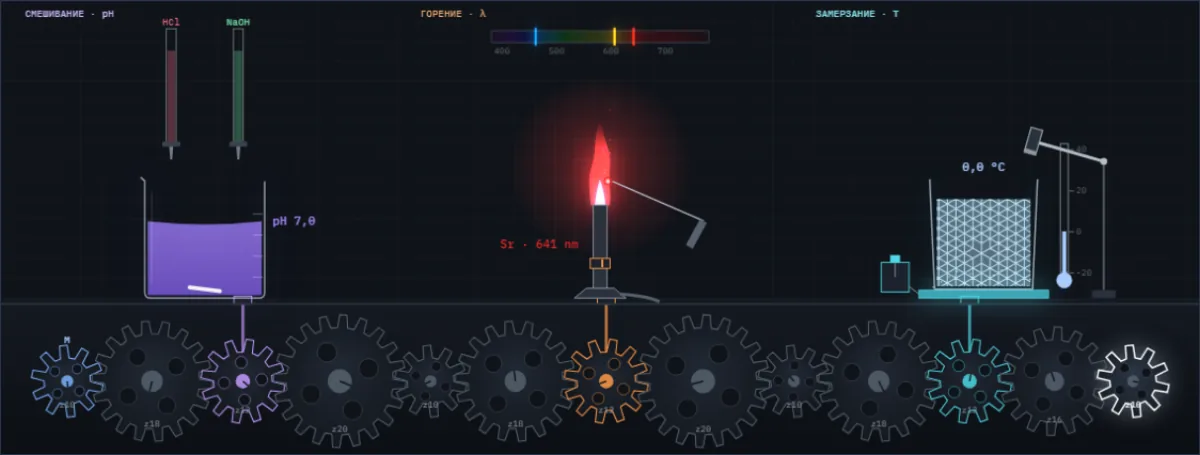
The index lab: a glass of cabbage juice, a burner, a glass of water on a cold plate and a gear train
Index · all quantities on one page
The lab at the entrance to the index

A drop of acid changes the colour of the juice, salt colours the flame, water freezes at a tap. Below them are all Simetrium sheets, by discipline and alphabetically.

Open the index →
08 · Your language
every link is a real page in that locale

Read it in your own language

translated and checkeddraft translationqueued